10 Day China Itinerary: Beijing, Xi'an, and Shanghai
A practical 10 day China itinerary for first-time visitors: 4 days in Beijing, 2 to 3 in Xi'an, and 3 in Shanghai, with high-speed rail between them.
Last updated
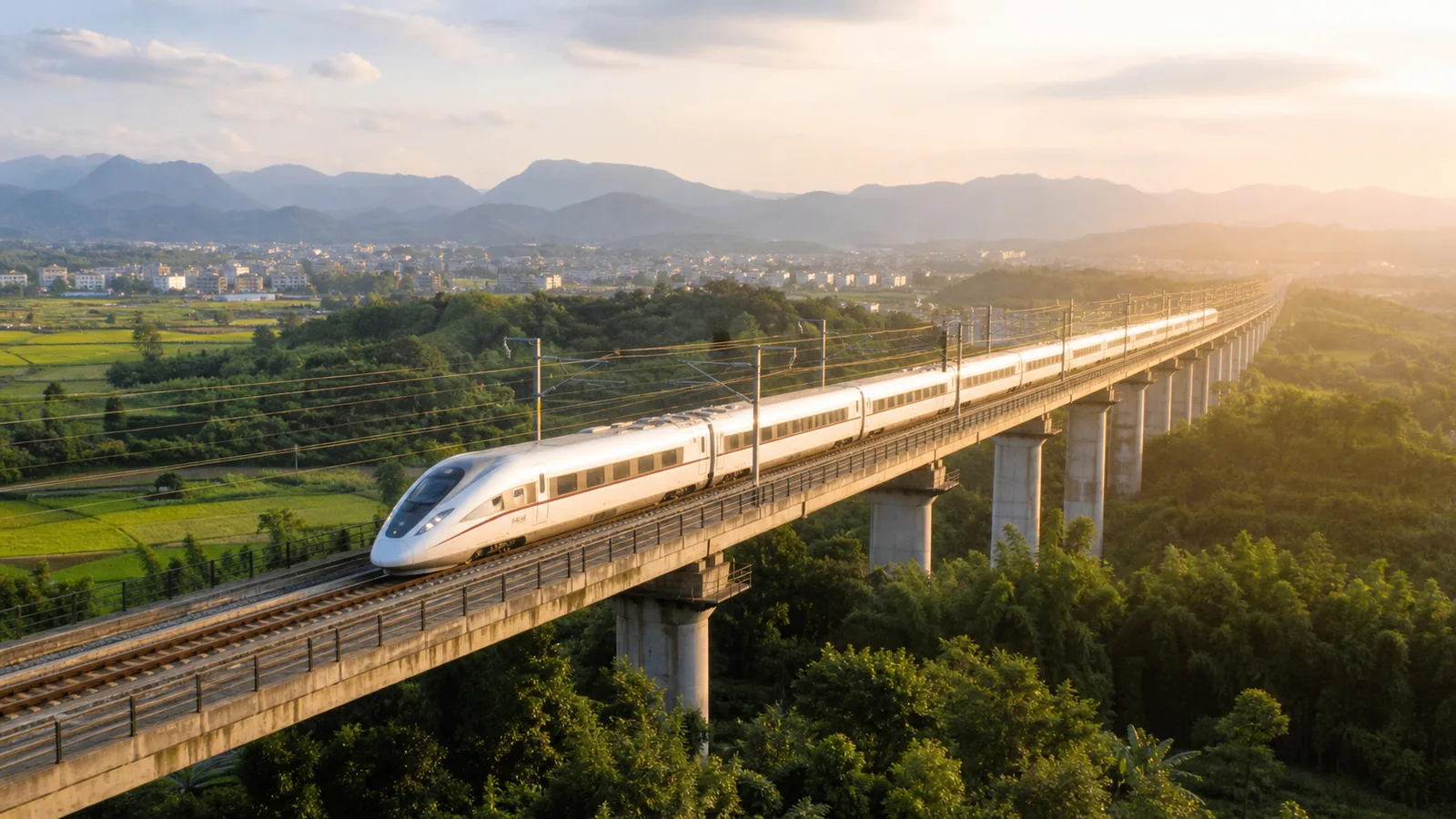
This 10 day China itinerary is the classic first loop, and it answers the question most first-timers ask: how do I see the headline sights without living on trains. The route runs Beijing to Xi’an to Shanghai, linked by high-speed rail. It gives Beijing the four days it needs, slots in the Terracotta Army in Xi’an, and finishes in Shanghai, the easiest big city to fly home from. It is also the most-booked version of the classic China route.
The shape is simple. Four nights in Beijing cover the Forbidden City, the Great Wall at Mutianyu, and a calmer day of imperial parks. Two nights in Xi’an are enough for the warriors and a sunset loop of the old city wall. Three nights in Shanghai give you the Bund, Yu Garden, and a free day to slow down before your flight. Beijing West to Xi’an North runs about 4 hours 20 minutes to 6 hours, and Xi’an straight through to Shanghai takes roughly 6 to 8 hours. You book both trains with your passport.
Day-by-day at a glance
- Day 1: Arrive Beijing, set up eSIM and payments, easy evening walk
- Day 2: Forbidden City and Tiananmen Square
- Day 3: Great Wall at Mutianyu
- Day 4: Temple of Heaven and Summer Palace
- Day 5: Train to Xi’an, Muslim Quarter at night
- Day 6: Terracotta Army, City Wall at sunset
- Day 7: Train to Shanghai, the Bund after dark
- Day 8: Yu Garden and old Shanghai
- Day 9: Pudong skyline and a free day
- Day 10: Departure from Shanghai
The two bookings that make or break the trip
Handle these before anything else. The Forbidden City releases tickets online only, 7 days ahead at 20:00 Beijing time, with a capped daily quota, and popular dates sell out within minutes. The Terracotta Army also caps daily entry and opens its window up to 7 days out, so set a reminder and book the moment it opens. Both use real-name booking: you enter your passport number when you buy and scan the same passport at the gate. Get these wrong and there is no walk-up fallback.
Before any of that, sort the practical layer that catches people out. Set up a travel eSIM so maps, translation, and ride apps work the moment you land. Link Alipay or WeChat Pay at home, since mobile payments run daily life here and cash is awkward. Most US, UK, Canadian, and Australian passport holders can use the 240-hour visa-free transit instead of a tourist visa, but only if you arrive at an eligible port and hold a confirmed onward ticket to a third country or region within 10 days. A simple US to China to US round trip does not qualify, so check your route before you book flights.
Beijing in 4 days
Beijing is the heaviest-hitting city on the route, which is why it gets four nights. See the full breakdown on the Beijing city guide; here is the rhythm for these dates.
- Day 1 stays light to beat jet lag: collect your bags, switch on the eSIM, and walk Qianmen or Wangfujing in the evening.
- Day 2 is the Forbidden City. Enter from the Tiananmen Square side in the morning and exit at the north gate, then climb Jingshan Park behind it for the rooftop view.
- Day 3 is the Great Wall at Mutianyu, the best-restored section near the city. Take the cable car up and the toboggan down so the day stays a half-day. A private car or small-group tour avoids the public-bus juggle.
- Day 4 is the calmer pair: the Temple of Heaven, busy with locals doing tai chi in the morning, then the Summer Palace lakes in the afternoon.
Skip Badaling (the crowded Wall section) and skip trying to add a hutong tour on a packed day. Mutianyu plus Jingshan already gives you the views without the queues.
Xi’an in 2 days
Two nights is the right amount for Xi’an on a 10 day trip. The Xi’an city guide has more, but the core is tight.
- Day 5 is a travel day. Take a morning G train from Beijing West to Xi’an North, store your bags, and spend the evening in the Muslim Quarter for hand-pulled noodles and roujiamo.
- Day 6 is the Terracotta Army in the morning, when the pits are quietest, then back to cycle the Xi’an City Wall toward sunset. A guided half-day at the warriors is worth it here, since the site has little English signage and the context is the whole point.
Skip the Big Wild Goose Pagoda climb if you are tight on time; the evening fountain show at its base is the better free option. Skip a day trip to Mount Hua on a 10 day route, it eats a full day you do not have.
Shanghai in 3 days
Shanghai is the soft landing and the easiest place to fly home from. The Shanghai city guide covers neighbourhoods in depth.
- Day 7 arrives by train at Hongqiao. Drop bags and walk the Bund after dark for the Pudong skyline.
- Day 8 pairs the classical Yu Garden (reserve ahead) with the surrounding bazaar, then the leafy French Concession or shopping on Nanjing Road.
- Day 9 crosses to Lujiazui in Pudong for skyline views from up high, with the rest of the day open for anything you missed or a slow cafe stop.
- Day 10 is departure from Pudong or Hongqiao. Allow extra time for the metro or maglev in morning traffic.
Skip the maglev for sightseeing unless you are already heading to Pudong airport; the metro is cheaper for everyday hops.
What to skip on 10 days
Ten days is enough for three cities, not four. The most common mistakes are stacking too much in:
- Do not add Chengdu or Guilin. They are excellent, but they belong on the 2 week China itinerary, not this one.
- Do not try to see both the Forbidden City and the Great Wall on the same day. They sit on opposite sides of the city.
- Do not book a sight on a transfer day (days 5 and 7). The train owns the morning or the afternoon.
- Do not chase a second Wall section or a second Xi’an day trip. Depth beats breadth on a first visit.
Make it 8 days or make it 12 days
Need it shorter? Cut Shanghai to two nights and fly out on day 9, or trim Beijing to three nights if jet lag is not a worry. That gives you a tidy 8-day version of the same loop.
Have 12 days? Add two nights in Xi’an for Mount Hua or a leisurely hutong day in Beijing, or tack Chengdu onto the front of the 2 week route instead. For the gentlest possible pace, see the first-time China itinerary.
What does 10 days in China cost?
Budget roughly 75 to 150 USD per person per day for a mid-range trip covering a comfortable hotel, meals, metro, and a couple of paid sights. Shanghai runs at the higher end of that band, Xi’an at the lower. On top of daily costs, add the two intercity trains (around 75 USD Beijing to Xi’an and 95 USD Xi’an to Shanghai in second class) and your timed-entry tickets and tours. A travel eSIM for the trip is typically under 30 USD.
Lock in your tickets the moment they open, buy your train seats about 2 weeks out through how to buy train tickets in China, and the rest of this route runs itself.
- Day 1
Arrive in Beijing and settle in Beijing
- Day 2
Forbidden City and Tiananmen Square Beijing
Forbidden City (Palace Museum)
- Day 3
Great Wall at Mutianyu Beijing
Great Wall at Mutianyu
- Day 4
Temple of Heaven and Summer Palace Beijing
Temple of Heaven, Summer Palace
- Day 5
High-speed train to Xi'an, evening in the old town Xi'an
Getting there: HSR · 4h 10m to 6h 45m
- Day 6
Terracotta Army Xi'an
Terracotta Army (Emperor Qinshihuang's Mausoleum Site Museum), Xi'an City Wall
- Day 7
High-speed train to Shanghai, evening on the Bund Shanghai
The Bund
Getting there: HSR · 6h to 9h 30m
- Day 8
Yu Garden and old Shanghai Shanghai
Yu Garden (Yuyuan Garden)
- Day 9
Pudong skyline and free day Shanghai
- Day 10
Departure Shanghai
Frequently asked questions
- How many days do I need for a first trip to China?
- For a first visit covering the headline sights, plan 10 to 14 days. Ten days comfortably links Beijing, Xian, and Shanghai by high-speed rail and flights, while two weeks lets you add Chengdu for the pandas or Guilin for the Li River. Trying to see more than four cities in 10 days means most of your time is spent in transit rather than at the sights.
- Do US, UK, Canadian, and Australian visitors need a visa for China in 2026?
- For a full multi-city holiday you normally still need a tourist visa, but China's 240-hour (10-day) visa-free transit policy covers citizens of 55 countries including the US, UK, Canada, and Australia as of 2026. To use it you must arrive at one of the eligible ports, hold a confirmed onward ticket to a third country or region, and stay within the designated provinces. Confirm your eligibility with the National Immigration Administration before relying on it.
- When is the best time to visit China?
- Spring (April to May) and autumn (September to October) bring the mildest weather and clearest skies across Beijing, Xian, and Shanghai. Avoid the first week of October and the Lunar New Year period, when domestic travel peaks and trains, hotels, and major sights sell out fast. Summer is hot and humid with crowds at every attraction, while winter is cold in the north but quiet and cheaper.
- What is the best way to travel between Chinese cities?
- High-speed trains are the fastest and most comfortable option for the core route, covering Beijing to Xian in about 4.5 to 6 hours and Beijing to Shanghai in roughly 4.5 hours. Book through the official 12306 system or a trusted reseller, and bring the passport you booked with for station entry. For longer hops like Chengdu to Guilin, a domestic flight usually saves time.
- How much does a 2-week or 10-day China trip cost?
- Budget roughly USD 70 to 130 per day per person for a comfortable mid-range trip in 2026, covering a private hotel room, meals, local transport, and attraction tickets. On top of that, add the big intercity legs: a high-speed train such as Beijing to Xian runs about USD 75, Xian to Shanghai about USD 95, and a flight on the southern legs around USD 70 to 80. Backpackers staying in hostels and eating at street stalls can get by on USD 40 to 60 a day, while Beijing and Shanghai sit at the higher end of every range.
- Can I do this itinerary in reverse, from Shanghai to Beijing?
- Yes. The Beijing, Xian, and Shanghai route works just as well in reverse, starting in Shanghai and finishing in Beijing, since high-speed trains run frequently in both directions. Flying into Shanghai is often cheaper and the city is the gentlest place to land and find your feet, then you work north to the heavier history in Xian and Beijing. The only thing to plan around is the Forbidden City and Terracotta Army bookings, which open 7 days ahead, so line up your dates whichever direction you travel.
- Is 10 days enough for China?
- Ten days is enough to see China's headline sights without rushing, as long as you stick to three cities. The classic loop of Beijing, Xian, and Shanghai fits comfortably into 10 days: four nights in Beijing for the Forbidden City and Great Wall, two in Xian for the Terracotta Army, and three in Shanghai, all linked by high-speed rail. It is not enough to add Chengdu's pandas or Guilin's scenery, which need a full two weeks, so save those for a longer trip.
- What is the best itinerary for a first trip to China?
- The most reliable first-timer route is Beijing, Xian, and Shanghai, linked by high-speed rail and one short flight or train, over 10 to 12 days. Beijing covers the Forbidden City and Great Wall, Xian adds the Terracotta Army, and Shanghai gives you the modern, easy-to-navigate finale. Add Chengdu for pandas or Guilin for the Li River only if you have a full two weeks.